
Over 80 percent of American corporate event planners report that scheduling delays often derail team retreat objectives. For professionals coordinating complex multi-day gatherings, every missed message and overlooked resource can turn careful plans upside down. With the right workflow essentials and a seamless scheduling tool, American planners finally have an opportunity to simplify collaboration, keep every detail on track, and build more efficient event experiences from start to finish.
Table of Contents
- Defining Event Coordination Workflow Essentials
- Types of Event Coordination Approaches and Tools
- How Inverse Scheduling Streamlines Planning
- Roles and Responsibilities for Event Planners
- Common Pitfalls and Risks in Event Coordination
Key Takeaways
| Point | Details |
|---|---|
| Essential Workflow Stages | Event coordination involves phases such as concept development, resource allocation, and risk assessment to ensure thorough planning and execution. |
| Flexible Approaches | Modern coordination methods prioritize adaptability and integration of technology to navigate complex event challenges effectively. |
| Inverse Scheduling Benefits | This innovative method improves planning efficiency by working backward from objectives, facilitating better resource allocation and risk mitigation. |
| Proactive Risk Management | Identifying and managing potential risks requires a comprehensive approach, including dynamic contingency planning and clear communication protocols. |
Defining Event Coordination Workflow Essentials
Event coordination is a systematic process of planning, organizing, and executing complex group gatherings with precision and strategic intent. At its core, the workflow encompasses multiple interconnected phases designed to transform an initial concept into a seamless multi-day experience. According to the Event Management Body of Knowledge (EMBOK), this process involves critical stages of assessment, anticipation, environment preparation, activity management, and administrative coordination.
The essential components of an effective event coordination workflow include comprehensive planning, logistical organization, resource allocation, and continuous communication. Event professionals must develop a structured approach that addresses multiple dimensions: scheduling, participant management, venue requirements, technological infrastructure, and contingency planning. This requires a holistic view that integrates detailed tactical execution with broader strategic objectives.
Successful event coordination demands a methodical approach that breaks down complex planning into manageable stages. Key workflow elements typically include:
- Initial concept development
- Stakeholder requirements gathering
- Budget and resource allocation
- Detailed scheduling and timeline creation
- Venue and infrastructure selection
- Technology and communication infrastructure setup
- Risk assessment and mitigation strategies
- Participant management and communication protocols
Professional event coordinators recognize that flexibility is as crucial as structured planning. While comprehensive workflows provide a critical roadmap, the ability to adapt quickly to unexpected challenges distinguishes exceptional event management from merely adequate execution.
Pro Tip: Create a centralized digital dashboard that tracks all event coordination elements, enabling real-time collaboration and immediate status updates across your planning team.
Types of Event Coordination Approaches and Tools
Event coordination approaches have evolved significantly, moving beyond traditional linear planning methods to more dynamic and adaptable frameworks. The Events Industry Council's design guide highlights the emergence of integrated and hybrid models that leverage technology and flexible methodologies to meet complex event management challenges. These approaches range from centralized project management techniques to more agile, collaborative strategies that prioritize real-time adaptation and participant engagement.
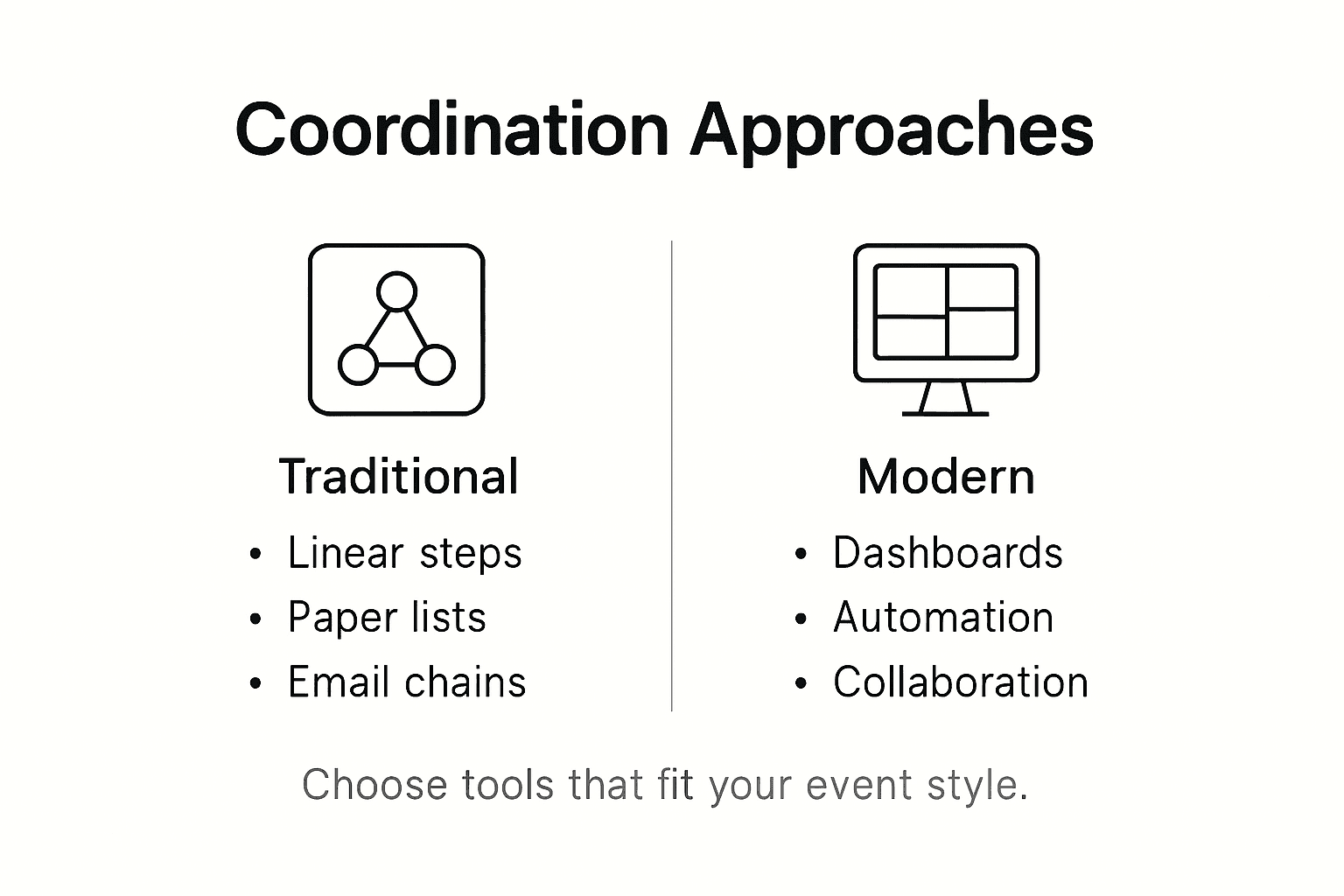
The primary event coordination approaches can be categorized into several key models:
Here's a comparison of event coordination approaches and their ideal use cases:
| Approach Type | Key Strengths | Best Suited For |
|---|---|---|
| Centralized Coordination | Unified decision-making | Large, tightly controlled events |
| Decentralized Coordination | Specialized expertise | Complex, cross-department events |
| Committee-Based Planning | Inclusive collaboration | Community-oriented gatherings |
| Agile Event Management | Rapid adaptation | Fast-paced, dynamic events |
- Centralized Coordination: A hierarchical approach where a single team or individual manages all event elements
- Decentralized Coordination: Distributes responsibilities across multiple teams or departments
- Committee-Based Planning: Involves collaborative decision-making with representatives from different stakeholder groups
- Agile Event Management: Emphasizes iterative planning and rapid response to changing requirements
Modern event coordination tools have transformed how professionals execute these approaches. According to archival research on event management practices, technology now plays a crucial role in streamlining complex event workflows. These tools typically include:
- Digital project management platforms
- Collaborative scheduling software
- Real-time communication systems
- Integrated budget tracking applications
- Risk assessment and contingency planning tools
- Participant engagement and feedback systems
Professional event coordinators must carefully select approaches and tools that align with their specific event objectives, organizational culture, and participant expectations. The most effective coordination strategy balances technological capabilities with human creativity and adaptability.
Pro Tip: Conduct a comprehensive technology audit before selecting event coordination tools, ensuring seamless integration with your existing workflow and team communication systems.
How Inverse Scheduling Streamlines Planning
Inverse scheduling represents a revolutionary approach to event planning that fundamentally transforms traditional linear scheduling methods. Advanced planning systems demonstrate how working backward from final objectives can dramatically improve coordination efficiency. This methodology starts with the event's ultimate goals and strategic milestones, then systematically traces backward to identify precise actions, resources, and timelines required for successful execution.

The core principles of inverse scheduling involve several critical strategies:
This summary highlights the impact of inverse scheduling versus traditional planning:
| Scheduling Method | Planning Sequence | Impact on Efficiency | Risk Mitigation Approach |
|---|---|---|---|
| Traditional Scheduling | Start-to-finish chronology | May miss critical dependencies | Relies on pre-set buffers |
| Inverse Scheduling | Objective-to-origin mapping | Improves workflow flexibility | Anticipates challenges early |
- Establishing clear end-state objectives
- Identifying critical milestones and dependencies
- Working backward to determine prerequisite actions
- Creating flexible contingency pathways
- Allocating resources based on reverse-engineered requirements
- Minimizing potential scheduling conflicts
Automated scheduling research confirms that this approach significantly enhances scheduling accuracy and participant satisfaction. By prioritizing end goals and working retrospectively, event coordinators can create more robust, adaptable plans that anticipate potential challenges and streamline complex multi-day event logistics. The method proves especially powerful for intricate events like corporate retreats, where multiple stakeholders, varied activities, and interconnected scheduling requirements demand sophisticated planning techniques.
Professional event planners recognize that inverse scheduling is not just a technique, but a strategic mindset. It requires comprehensive understanding of event objectives, meticulous attention to detail, and the ability to visualize complex interdependencies across different planning stages. Successful implementation demands both technological tools and human insight to create truly effective event workflows.
Pro Tip: Develop a reverse-timeline template that maps critical milestones backward from your event's final objective, allowing you to identify potential bottlenecks and resource constraints early in the planning process.
Roles and Responsibilities for Event Planners
Bureau of Labor Statistics research reveals the multifaceted nature of event planning, highlighting the complex responsibilities that modern event professionals must navigate. Event planners serve as strategic architects who transform conceptual ideas into meticulously executed experiences, managing everything from initial design to final implementation. Their role extends far beyond simple logistics, encompassing strategic planning, stakeholder management, creative problem-solving, and comprehensive operational coordination.
The core responsibilities of event planners typically include:
- Conceptual Design: Developing the event's strategic vision and thematic framework
- Budget Management: Creating and maintaining precise financial parameters
- Vendor Coordination: Selecting, negotiating, and managing relationships with service providers
- Logistical Planning: Mapping detailed timelines, transportation, and infrastructural requirements
- Risk Assessment: Identifying potential challenges and developing mitigation strategies
- Stakeholder Communication: Maintaining transparent and consistent engagement with all participants
Successful event planners must possess a unique blend of technical skills and interpersonal capabilities. They act as project managers, creative directors, negotiators, and problem solvers simultaneously. Their responsibilities demand exceptional organizational abilities, emotional intelligence, and the capacity to maintain composure under pressure. The ability to anticipate potential issues, develop contingency plans, and adapt quickly to changing circumstances distinguishes exceptional event professionals from average practitioners.
Professional event coordination requires continuous learning and adaptability. Planners must stay current with technological innovations, emerging industry trends, and evolving participant expectations. This involves understanding complex scheduling technologies, leveraging digital collaboration tools, and maintaining a flexible approach that can accommodate rapidly changing event dynamics.
Pro Tip: Develop a comprehensive personal skills matrix that identifies your strengths and areas for improvement, then systematically pursue professional development opportunities to enhance your event planning capabilities.
Common Pitfalls and Risks in Event Coordination
Academic research on event management reveals that event coordination involves navigating a complex landscape of potential risks and operational challenges. Professional event planners must develop a sophisticated understanding of systemic vulnerabilities that can undermine even the most carefully designed retreats. These risks extend beyond simple logistical complications, encompassing strategic, operational, and interpersonal dimensions that require holistic anticipation and proactive management.
The most significant risks in event coordination typically include:
- Communication Breakdowns: Fragmented information sharing across teams
- Resource Misallocation: Inefficient budget and personnel distribution
- Technological Failures: Infrastructure and connectivity disruptions
- Compliance Vulnerabilities: Legal and regulatory oversight gaps
- Participant Experience Risks: Misalignment between event design and attendee expectations
- Contingency Planning Weaknesses: Inadequate backup strategies for critical failures
Comprehensive event risk management research emphasizes that successful risk mitigation requires a multifaceted approach. Event coordinators must develop sophisticated assessment frameworks that go beyond simple checklists, integrating dynamic risk perception techniques and adaptive response mechanisms. This involves creating layered contingency plans, establishing clear communication protocols, and maintaining flexible operational strategies that can quickly pivot when unexpected challenges emerge.
Professional event coordinators recognize that risk management is not about eliminating all potential problems, but about building resilient systems that can absorb and adapt to unexpected disruptions. This requires cultivating a proactive mindset, developing comprehensive scenario planning skills, and maintaining continuous situational awareness throughout the event lifecycle.
Pro Tip: Create a dynamic risk registry that categorizes potential challenges by likelihood and impact, and develop specific mitigation strategies for each identified scenario.
Streamline Your Multi-Day Retreat Planning with WhenNOT
Planning complex multi-day retreats demands precise coordination, seamless communication, and adaptable scheduling strategies. This article highlights the challenge of managing multiple participants, timelines, and contingency plans while maintaining clarity and efficiency. The concept of inverse scheduling offers a powerful tool to improve workflow flexibility, minimize conflicts, and anticipate bottlenecks before they arise. However, implementing such innovative methods manually can be overwhelming and time-consuming.
WhenNOT is designed to eliminate these scheduling headaches by asking participants when they are not available instead of traditional availability queries. This simple yet effective inverse scheduling approach aligns perfectly with the strategic mindset emphasized here. By visualizing everyone's busy days concurrently, you gain immediate insight into optimal dates across complex multi-day events like corporate retreats or community gatherings. This reduces communication breakdowns and resource misallocation, two major risks outlined in the article.
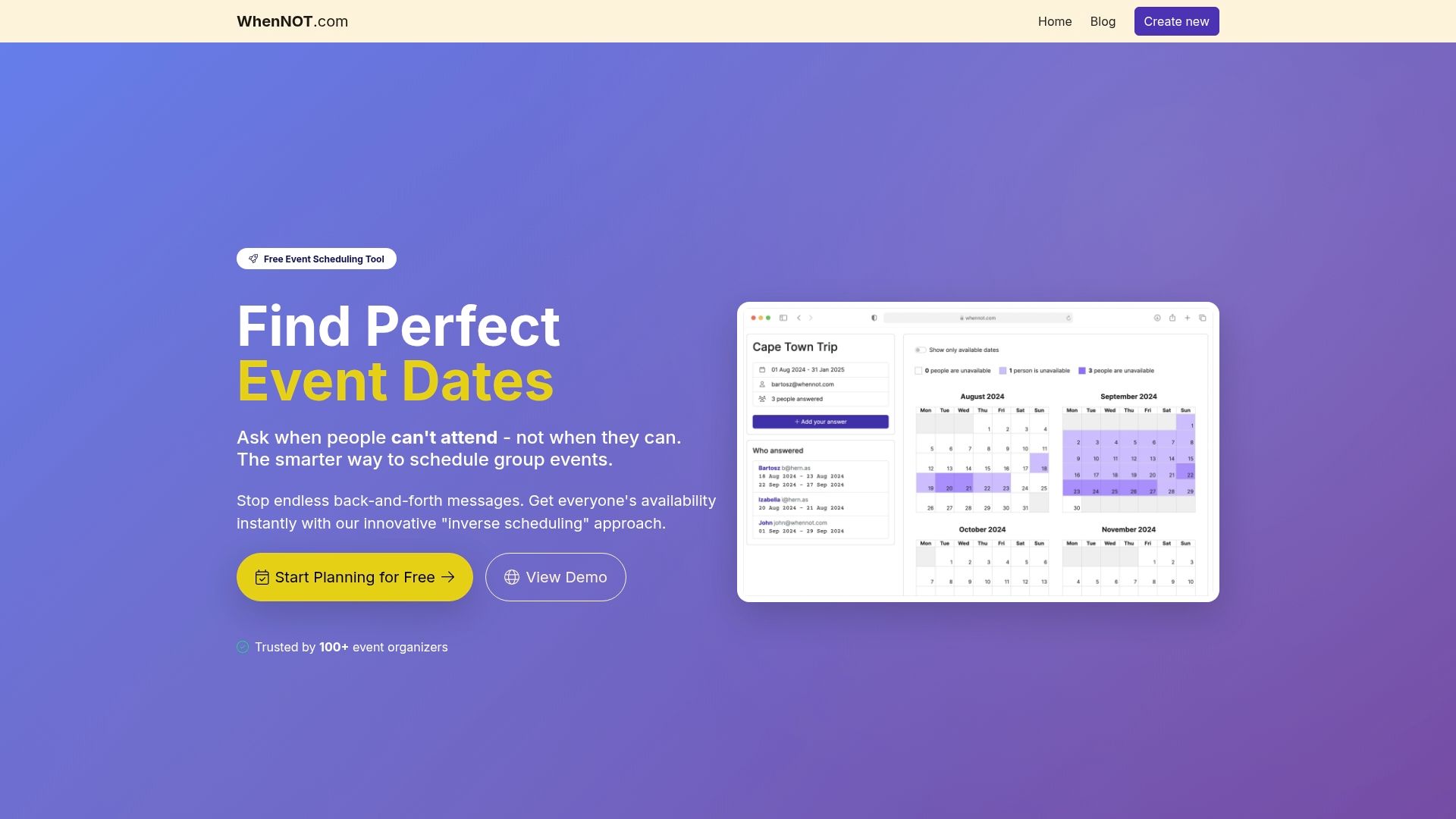
Ready to transform your event coordination workflow and experience effortless multi-day scheduling? Visit WhenNOT and create your event in minutes. Share your unique link with participants—no sign-ups required—and quickly identify ideal dates with less stress and more confidence. Don't let scheduling conflicts slow you down. Start using WhenNOT’s innovative scheduling today and enjoy a simpler, smarter way to plan your next event.
Learn more about how inverse scheduling revolutionizes planning at WhenNOT. Discover the difference a proactive tool can make for your multi-day retreats now.
Frequently Asked Questions
What is event coordination workflow?
Event coordination workflow is a systematic process that involves planning, organizing, and executing complex gatherings. It includes phases such as assessment, anticipation, environment preparation, activity management, and administrative coordination to ensure a seamless multi-day experience.
What are the key components of an effective event coordination workflow?
An effective event coordination workflow includes comprehensive planning, logistical organization, resource allocation, and ongoing communication. It addresses scheduling, participant management, venue selection, technology setup, and contingency planning.
How does inverse scheduling improve event planning?
Inverse scheduling improves event planning by working backward from final objectives. This method identifies critical actions and resources needed for successful execution, enhancing efficiency, flexibility, and overall effectiveness of the planning process.
What are the common risks in event coordination and how can they be managed?
Common risks in event coordination include communication breakdowns, resource misallocation, technological failures, compliance vulnerabilities, participant experience misalignments, and insufficient contingency plans. Managing these risks involves creating a dynamic risk registry, developing layered contingency plans, and maintaining clear communication protocols.