
Most American hobby group leaders spend over 40 percent of their planning time coordinating schedules rather than enjoying their events. Worldwide organizers face similar struggles, juggling participant preferences across time zones and unpredictable commitments. This matters because efficient scheduling is the foundation for memorable multi-day events and strong community engagement. With practical strategies and modern tools, you can reduce unnecessary communication, eliminate confusion, and bring your group’s plans to life with less effort.
Table of Contents
- Hobby Group Scheduling Defined And Debunked
- Popular Methods And Their Limitations
- How Inverse Scheduling Tools Transform Planning
- Key Steps For Multi-Day Event Coordination
- Common Pitfalls And How To Avoid Them
Key Takeaways
| Point | Details |
|---|---|
| Hobby Group Scheduling Importance | Balancing recreational activities is essential for personal well-being, moving beyond traditional time management to incorporate enjoyable experiences. |
| Challenges of Coordination | Common scheduling issues include poor communication and conflicting availability, which can lead to reduced group participation. |
| Adoption of Inverse Scheduling Tools | Innovative scheduling tools simplify group coordination by automatically syncing calendars and proposing optimal meeting times based on member availability. |
| Proactive Planning Strategies | Effective event coordination requires clear goals, flexible timelines, and centralized communication to minimize potential conflicts and enhance participation. |
Hobby Group Scheduling Defined and Debunked
Hobby group scheduling is a strategic approach to managing multiple recreational activities while maintaining balance and preventing burnout. Unlike traditional time management techniques, modern scheduling recognizes that hobbies are not just optional extras but essential components of personal well-being and creativity. Micro-hobby solutions have emerged as a flexible alternative to rigid scheduling models, allowing individuals to integrate diverse interests without overwhelming their daily routines.
The core challenge for hobby enthusiasts involves allocating limited time across multiple interests while maintaining quality and enjoyment. Creating a mixed hobby schedule requires careful assessment of personal time, energy levels, and genuine passion. This means moving beyond simple time-blocking to a more nuanced approach that respects individual rhythms and prevents activity fatigue. Successful scheduling isn't about cramming in maximum activities, but strategically curating experiences that genuinely energize and inspire.
Effective hobby group scheduling involves several key principles: realistic time assessment, priority ranking of activities, flexibility in commitment, and recognition of personal energy cycles. Micro-hobby strategies suggest breaking larger time commitments into smaller, more manageable segments. Instead of requiring a full weekend for a project, hobbyists can now engage in 15-30 minute focused bursts that maintain skill progression and motivation without causing stress.
Pro tip: Experiment with a rotating hobby schedule where you allocate specific weeks or months to different interests, preventing burnout and maintaining novelty in your recreational pursuits.
Popular Methods and Their Limitations
Hobby group scheduling has traditionally relied on a variety of communication methods that often create more confusion than clarity. Popular group scheduling tools reveal significant limitations in traditional coordination approaches. Email chains, group text messages, and shared spreadsheets frequently result in endless back-and-forth communications, making it challenging to determine final plans or secure full group participation.
Different scheduling methods come with unique drawbacks that can derail group hobby coordination. Group messaging apps often suffer from notification fatigue, where participants become overwhelmed and miss critical planning details. Spreadsheets require manual updates and constant tracking, placing an administrative burden on the group organizer. Social media event planning lacks the precision needed for complex scheduling, frequently resulting in incomplete responses and unclear commitments.

Here's a side-by-side look at popular group scheduling methods and their main challenges:
| Method | Main Difficulty | Typical Outcome |
|---|---|---|
| Email Chains | Excessive message volume | Slow, unclear decisions |
| Group Messaging Apps | Notification overload | Missed planning details |
| Spreadsheets | Manual updates required | Organizer workload spikes |
| Social Media Events | Incomplete RSVPs | Uncertain commitments |
The most common scheduling challenges include coordinating across different time zones, managing last-minute changes, and ensuring comprehensive group participation. Digital tools have attempted to address these issues, but many still fall short of providing seamless, user-friendly experiences. Complex interfaces, required sign-ups, and compatibility issues continue to frustrate hobby groups seeking efficient planning solutions. The ideal scheduling method must balance simplicity, flexibility, and comprehensive group coordination capabilities.
Pro tip: Create a standardized communication template for your hobby group that clearly outlines scheduling expectations and response requirements to minimize confusion and improve planning efficiency.
How Inverse Scheduling Tools Transform Planning
Inverse scheduling represents a revolutionary approach to group coordination, fundamentally changing how hobby groups plan and communicate. Advanced AI scheduling tools leverage sophisticated algorithms to streamline complex planning processes by identifying overlapping free times across multiple participants. This approach flips traditional scheduling methods on their head, focusing on availability gaps instead of requiring each person to manually propose specific time slots.
The core innovation of inverse scheduling lies in its ability to simplify group coordination with minimal effort from participants. Rather than endless email chains and manual calendar comparisons, these intelligent tools automatically sync calendars, detect potential meeting windows, and even account for different time zones and individual workload constraints. By removing the administrative burden, hobby groups can spend more time engaging in their shared interests and less time navigating scheduling logistics.
Modern inverse scheduling tools go beyond simple time matching. They incorporate contextual intelligence that considers individual preferences, recurring commitments, and even travel times between locations. This nuanced approach means hobby groups can create more realistic and considerate scheduling plans that respect each member's unique constraints. The technology adapts dynamically, suggesting optimal meeting times that minimize conflicts and maximize group participation.
Pro tip: Introduce inverse scheduling tools gradually to your hobby group, starting with a test event to help members understand and appreciate the simplified coordination process.
Key Steps for Multi-Day Event Coordination
Effective multi-day event planning begins with establishing clear goals and creating a comprehensive strategic framework. The foundation of successful hobby group coordination requires defining the event's core purpose, understanding participant expectations, and developing a flexible timeline that accommodates diverse scheduling needs. This initial planning phase sets the trajectory for a seamless multi-day experience, ensuring all group members are aligned and motivated.
The core of multi-day event coordination involves meticulous task management and strategic communication. Successful groups prioritize delegation of responsibilities, create detailed event schedules, and maintain open communication channels among participants. Establishing realistic budgets, building contingency plans, and maintaining adaptability are critical components that prevent potential scheduling conflicts and ensure smooth event progression. Technology plays a crucial role in streamlining these complex coordination efforts, allowing real-time updates and collaborative planning.
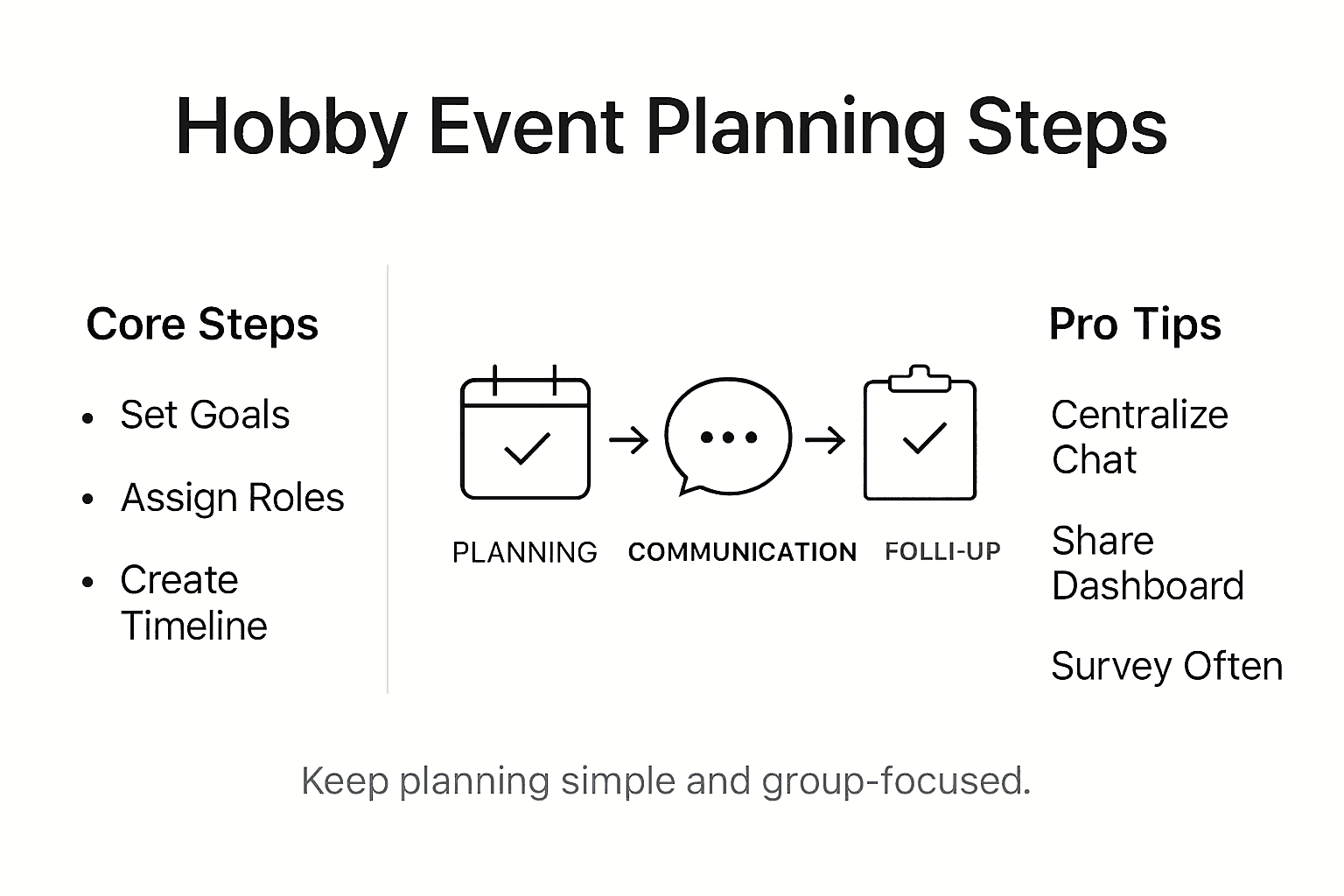
Implementing a robust communication strategy is paramount for managing multi-day events. This involves creating centralized information platforms, setting clear expectations for participant availability, and developing mechanisms for real-time updates and adjustments. Hobby groups must balance structured planning with flexibility, recognizing that unexpected changes are inevitable. By establishing clear communication protocols and using collaborative scheduling tools, groups can quickly adapt to emerging challenges while maintaining the event's overall objectives.
Key factors for successful multi-day hobby event coordination include:
| Factor | Why It Matters | Impact on Group |
|---|---|---|
| Clear Purpose | Aligns member expectations | Keeps group motivated |
| Flexible Timeline | Adapts to changing schedules | Reduces stress |
| Centralized Info | Prevents communication gaps | Improves participation |
| Detailed Roles | Ensures all tasks are managed | Smoother event execution |
Pro tip: Create a shared digital dashboard that tracks event progress, participant responsibilities, and real-time schedule modifications to keep everyone informed and engaged.
Common Pitfalls and How to Avoid Them
Scheduling conflicts in hobby groups emerge from several predictable patterns that can derail even the most well-intentioned planning efforts. The most frequent challenges include poor communication, unrealistic time expectations, and lack of clear coordination mechanisms. Groups often struggle with overlapping commitments, inconsistent availability, and reactive rather than proactive planning approaches that lead to frustration and reduced participation.
Understanding the root causes of scheduling breakdowns is crucial for developing effective mitigation strategies. Complex hobby group dynamics require transparent communication channels, realistic time assessments, and flexible planning frameworks. Common pitfalls include assuming everyone has identical availability, failing to establish core scheduling windows, and neglecting to account for individual participant constraints. Successful groups recognize that scheduling is not about finding perfect times, but about creating inclusive processes that respect each member's unique circumstances and commitments.
Technology and structured communication protocols can significantly reduce scheduling friction. Implementing digital tools that provide real-time calendar synchronization, establishing clear group communication norms, and creating flexible participation models are essential strategies. Groups should develop contingency plans, maintain open dialogue about scheduling challenges, and be willing to adapt their approach based on ongoing feedback. By prioritizing transparency, mutual understanding, and technological support, hobby groups can transform potentially frustrating coordination efforts into smooth, collaborative experiences.
Pro tip: Create a monthly scheduling survey that allows members to proactively share their availability and constraints, helping the group anticipate and navigate potential scheduling challenges.
Simplify Your Hobby Group Scheduling Today With WhenNOT
Managing hobby group schedules can quickly become overwhelming due to conflicting availabilities and endless messaging. This article highlights how traditional scheduling methods cause frustration through unclear commitments and excessive back-and-forth. If you want to eliminate these pain points and embrace an effective solution based on inverse scheduling, WhenNOT is designed specifically to help groups like yours. Its unique approach asks participants only when they are unavailable making multi-day or flexible date planning effortless and stress-free.
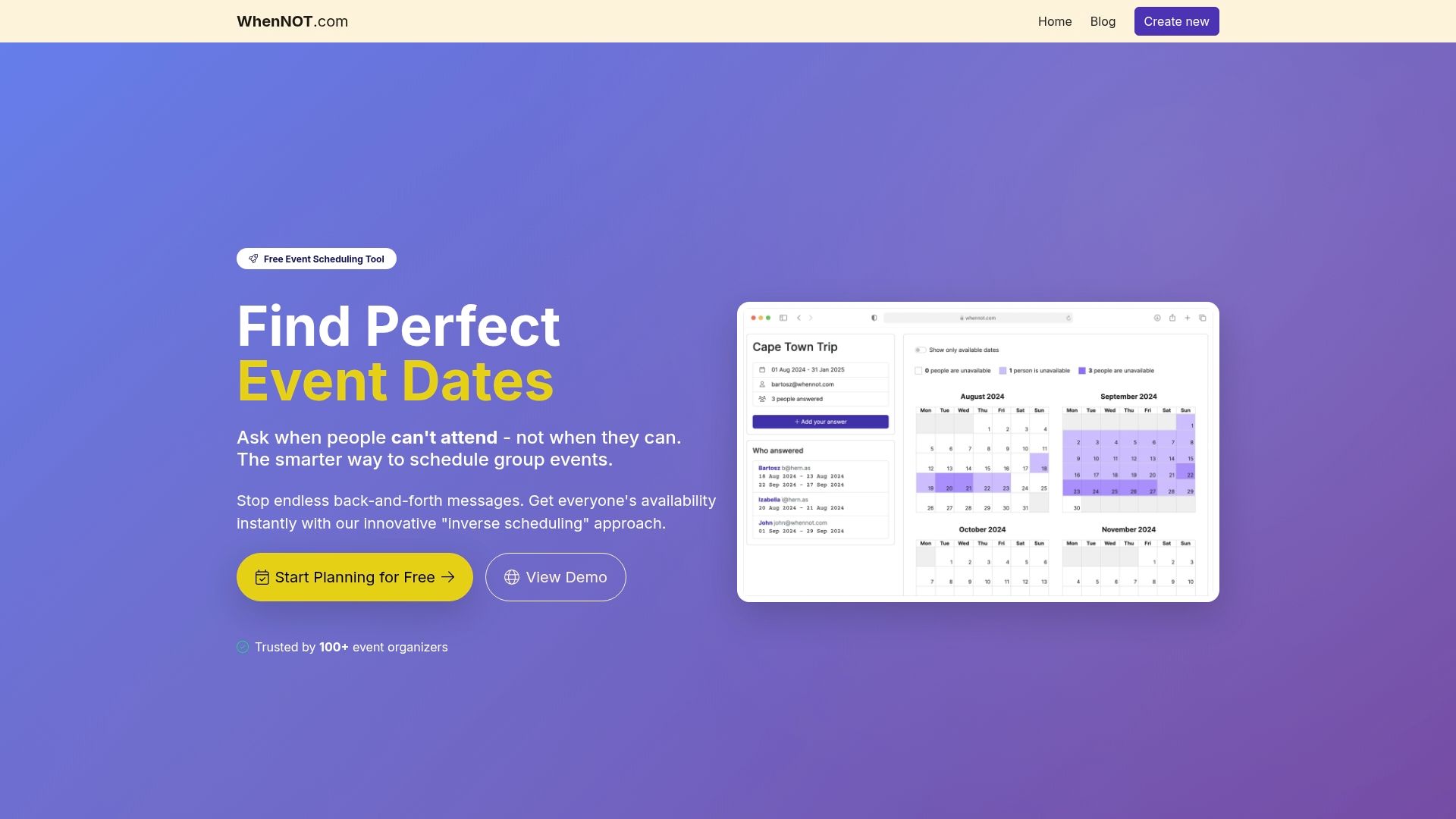
Take control of your group event planning now by trying WhenNOT. Enjoy a free, user-friendly platform that visualizes everyone’s busy days simultaneously so you can quickly pinpoint the best dates. No sign-ups required for participants and full privacy guaranteed. Don’t let scheduling conflicts drain your group’s energy—start streamlining your hobby activities with WhenNOT’s innovative inverse scheduling tool today and experience a faster way to coordinate. Learn more on our landing page and transform your planning process with confidence.
Frequently Asked Questions
What is hobby group scheduling?
Hobby group scheduling is a strategy for managing recreational activities that focuses on balancing multiple interests while preventing burnout and maintaining enjoyment. It involves assessing personal time and energy to create a flexible schedule that works for everyone in the group.
How does inverse scheduling differ from traditional scheduling methods?
Inverse scheduling uses advanced algorithms to identify overlapping availability among group members, simplifying the planning process. Unlike traditional methods that require participants to propose times, inverse scheduling automatically syncs calendars and suggests ideal meeting windows with minimal effort.
What common pitfalls should hobby groups avoid when scheduling?
Common pitfalls include poor communication, unrealistic time expectations, and lack of clear coordination. These can lead to conflicts and decreased participation. To avoid them, groups should maintain transparent communication, set realistic schedules, and be flexible with participants' needs.
How can technology improve hobby group scheduling?
Technology can streamline scheduling by providing real-time updates, facilitating communication, and offering collaborative tools for coordination. Digital tools can synchronize calendars, help manage responsibilities, and reduce administrative burdens, making the planning process quicker and less stressful.